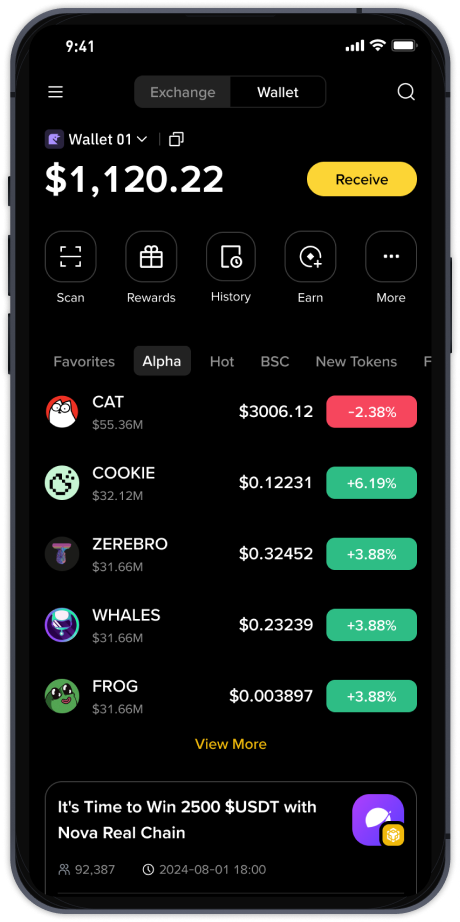
A Beginner’s Guide to Operating on Binance Exchange: Deposits, Trading, and Withdrawals

Binance is one of the largest and most widely used cryptocurrency exchanges in the world. For newcomers, the initial operating steps can seem complex, but understanding the core functions—depositing funds, executing trades, and withdrawing assets—is essential for safe and efficient use. This guide provides a straightforward walkthrough of these key operations on the Binance platform.
Step 1: Account Setup and Security
Before any operation, you need a verified Binance account. After registering with your email or phone number, complete the identity verification (KYC) process. This usually involves providing a government-issued ID and a selfie. Once verified, enable two-factor authentication (2FA) using an authenticator app like Google Authenticator. This adds a critical layer of security to your account, preventing unauthorized access even if your password is compromised.
Step 2: Depositing Funds
To start trading, you need to deposit funds into your Binance wallet. There are two main methods:
1. Fiat Deposit (Local Currency): Go to the "Buy Crypto" section. You can purchase cryptocurrencies directly using a debit/credit card, bank transfer, or third-party payment services like P2P (peer-to-peer) trading. Select your fiat currency (e.g., USD, EUR) and the crypto you want to buy. Follow the on-screen instructions to complete the payment.
2. Crypto Deposit: If you already own crypto elsewhere, go to "Wallet" > "Deposit." Select the cryptocurrency you wish to deposit. Binance will generate a unique wallet address and a corresponding network (e.g., ERC20 for Ethereum, BEP20 for BSC). Carefully copy this address. Send your crypto from your external wallet to this address. Always double-check the network and address to avoid losing funds.
Step 3: How to Execute a Trade
Once your funds appear in your "Spot Wallet," you can begin trading. Navigate to "Trade" > "Classic" or "Advanced." The interface shows a price chart, order book, and trading pairs like BTC/USDT.
- Market Order: A market buy or sell executes immediately at the current best available price. This is the fastest way to enter or exit a position but may have slight slippage during high volatility.
- Limit Order: You set a specific price at which you want to buy or sell. The order will only fill when the market reaches your price. For example, if Bitcoin is trading at $50,000 and you set a buy limit at $48,000, the order will only execute if the price drops to that level.
- Stop-Loss/Stop-Limit: These are risk management tools. A stop-loss order triggers a market sell when the price falls to a certain level, helping limit potential losses.
Enter the amount you want to trade (e.g., 0.01 BTC) and review the total cost in USDT. Click "Buy BTC" or "Sell BTC" to place your order.
Step 4: Withdrawing Cryptocurrency or Fiat
To move your funds out of Binance, go to "Wallet" > "Withdraw."
1. For crypto withdrawals, select the coin you want to withdraw. Paste your external wallet address (not an exchange deposit address). Choose the correct network (e.g., BEP20 for low fees, ERC20 if the receiving wallet requires it). Enter the amount and complete the 2FA verification. A small network fee will be deducted.
2. For fiat withdrawals, go to the "Fiat and Spot" section, then "Withdraw" and select your local currency. You can withdraw to your linked bank account or a third-party payment service. The processing time can vary from instant to a few business days.
Critical Safety Tips for Beginners
- Always use the official Binance website or app. Phishing links are common.
- Do not share your API keys or password with any third-party service unless absolutely necessary.
- For large holdings, move assets to a hardware wallet (like Ledger or Trezor) instead of leaving them on the exchange.
- Start with a small deposit to test the entire process—from deposit to trade to withdrawal—before committing larger sums.
- Monitor your 2FA settings and avoid using SMS-based 2FA if possible, as SIM-swap attacks can bypass it.
Conclusion
Operating on Binance is a logical process: secure your account, fund it, trade responsibly, and withdraw when needed. By mastering these fundamental operations, you can confidently navigate the exchange and focus on your trading or investment strategy. Always prioritize security and double-check every detail, especially wallet addresses and network selections, to ensure your funds remain safe.